Rewired in Practice: What Resonates — and What’s Missing
Launch day is execution. What follows is discipline — the quiet work that turns delivery into value.
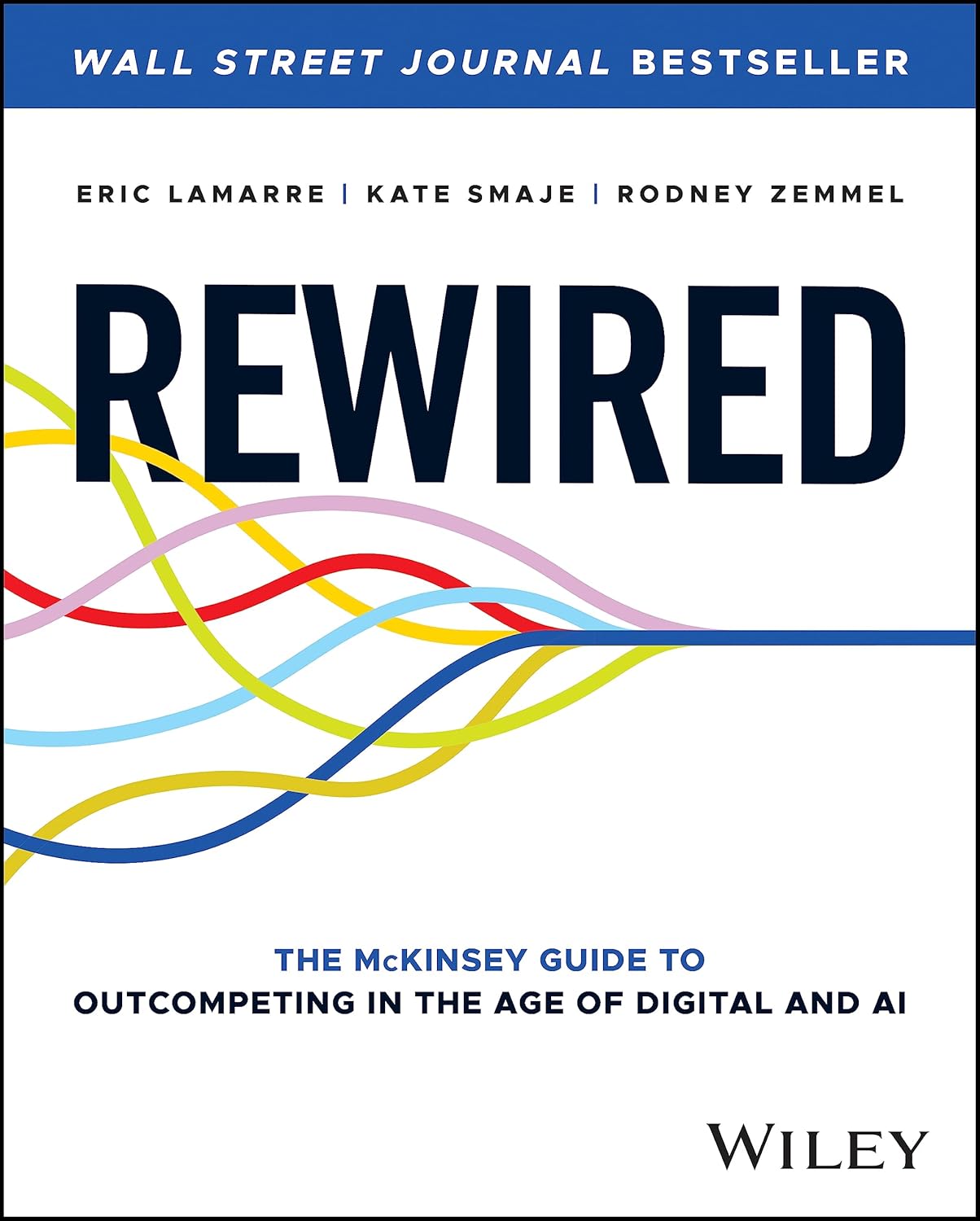
When I first read Rewired, it hit close to home. Published in mid-2023, it was framed as a playbook for digital and AI transformation, but the message was timeless: technology changes fast — discipline rarely does. I was leading a large transformation at the time, and almost every line in the book echoed the lessons we were living through. It didn’t sound new — it sounded right.
Transformation isn’t proven by design documents or kickoff celebrations. It’s proven months later, when the slides are gone and the metrics still move. Rewired made that point clearly: rhythm, ownership, and value realization separate activity from progress.
I’ve also seen the other side. A few years ago, I managed a global risk-reporting program that looked perfect on paper. The architecture was solid; the adoption wasn’t. Teams built dashboards no one used because no one owned the outcome. We rebuilt the plan around six-week value checkpoints — smaller reviews, visible metrics, simple accountability. Within a quarter, leadership stopped asking for proof because they could see it. That experience made the theory real.
I haven’t always succeeded — and that matters. The hardest part of transformation isn’t the system; it’s sustaining belief when fatigue sets in. I’ve learned to see it as work of hearts and minds as much as strategy and metrics. Talking about it — and acting on it — keeps belief alive when structure alone won’t.
The strongest programs start with one rule: outcomes first. A roadmap is only credible when it’s anchored in measurable value. When people own results end to end, adoption follows. When ownership blurs, value becomes optional.
Friction usually isn’t a design flaw — it’s a behavioral one. I’ve seen momentum collapse when funding followed the fiscal calendar instead of evidence. One enterprise paused every Q4 to “review ROI.” By the time the review ended, the data was stale and the talent had moved on. We replaced that cycle with six-week value reviews — short, factual, live metrics. Progress stopped needing justification; it became visible.
Funding should reward continuation, not completion. The next phase should be earned through results, not assumed because a plan exists. That simple shift changes how leaders talk about progress and proof.
Leadership rhythm matters. The best sponsors I’ve worked with didn’t hover — they showed up predictably. Fifteen minutes every other week: one decision, one insight, one ask. That kind of follow-through builds trust faster than any governance deck.
Rewired captured something that’s still true two years later: value realization isn’t a closing phase; it’s the pulse that keeps everything else alive. Every interaction either reinforces belief or erodes it. Strong teams protect leadership attention by bringing clarity, not noise.
Frameworks help, but they don’t deliver value on their own. People do — through habit, accountability, and persistence when the spotlight moves on. That’s the real discipline, and it’s where most transformations either mature or fade.